
Our Services
Vegetation
Our experienced vegetation crew specializes in comprehensive vegetation management services for solar farms, including routine mowing, selective brush and tree trimming, invasive species control, targeted herbicide application, and native/pollinator-friendly planting to reduce shading and maximize energy output. We maintain clear access roads and equipment pads, perform erosion control and stormwater compliance, and coordinate permits and inspections while following strict safety and wildfire-mitigation protocols. With remote monitoring, seasonal maintenance plans, and cost-effective contracts, our team helps solar operators preserve site performance, ensure regulatory compliance, and protect long-term asset value.
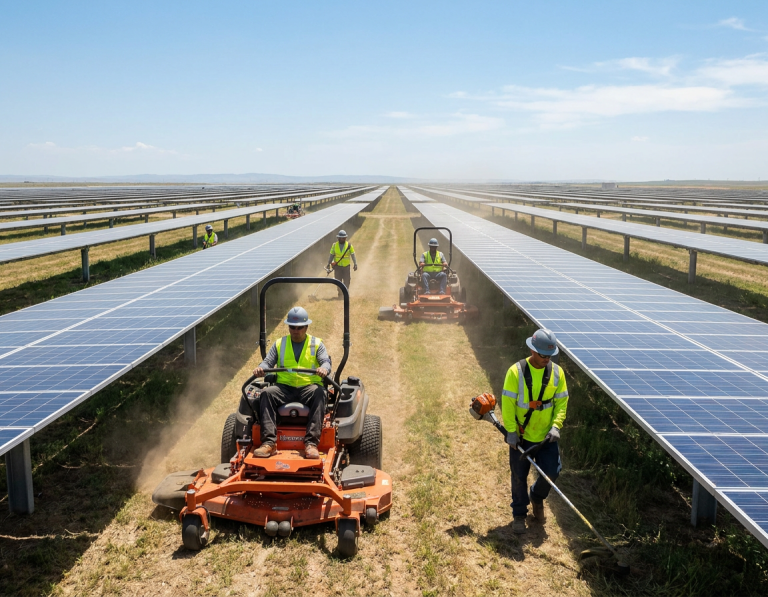
Lawn Mowing
Our lawn mower service for solar farms delivers clean, efficient vegetation management using battery-powered and low-emission equipment along with experienced crews to protect panels, reduce fire risk, and meet safety and environmental standards; we provide scheduled mowing, targeted trimming, and debris removal to maximize energy output, minimize downtime, and keep your site attractive and compliant.
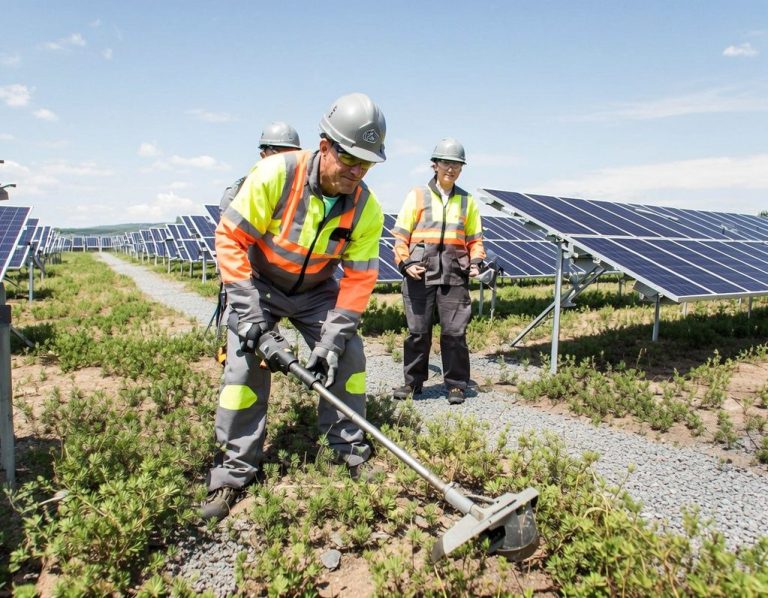
Safety First, Number One Priority
Safety first — our number one priority for every vegetation crew member. Before work begins we conduct hazard assessments and toolbox talks, wear proper PPE, use only inspected equipment, and follow traffic and wildlife safety procedures; anyone can stop work if a situation feels unsafe. Ongoing training, clear communication, heat- and weather-aware scheduling, and well-practiced emergency plans keep crews safe while cutting, trimming, or clearing vegetation near roads, power lines, and properties. Protecting people and the public comes before speed or convenience — safety always comes first.
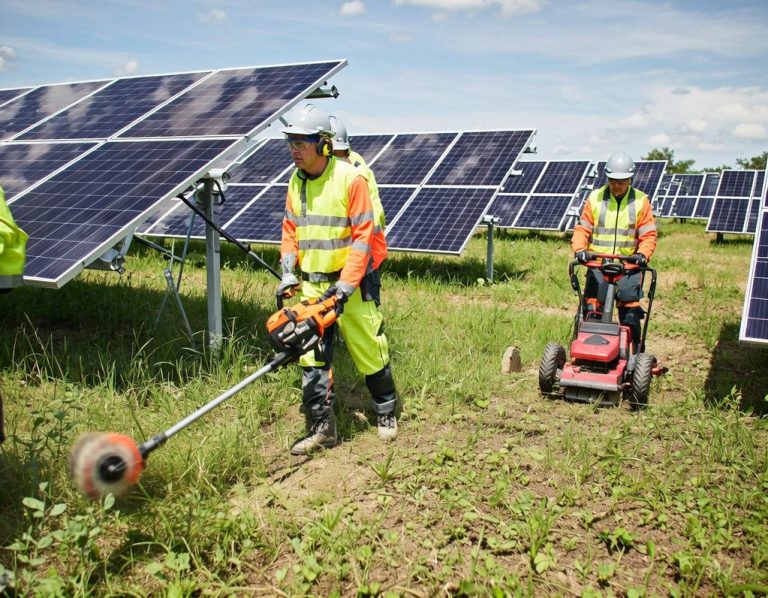
Mowing
Mowing a solar farm’s vegetation safely, cleanly, and efficiently means using trained operators and the right equipment—low-profile or flail mowers, non-sparking blades, and guards—to avoid panel damage and reduce fire risk, while crews wear proper PPE and follow electrical lockout/tagout procedures. Schedule mowing to minimize soil compaction and erosion, avoid wet conditions, and protect pollinator habitat when possible; remove clippings from panels and racks by mulching or vacuuming to keep arrays clean and maintain peak energy output. Plan efficient routes, use fuel- or battery-efficient machinery and GPS guidance when available, and maintain clear communication with operations staff to minimize downtime and ensure both safety and long-term vegetation control.